
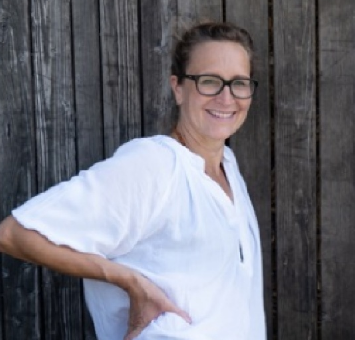
I am an occupational therapist with a BSc in Occupational Therapy from the Netherlands, a Professional Systemic Coach qualification from Germany, and I’m currently studying for an MSc in Health Psychology and Prevention. In 2016, I founded The Empowerment Project to support healthcare and education professionals through coaching and themed events that promote a more humane and just future.
In my work with children and families, I collaborate within interprofessional teams, which has helped me develop a multi-perspective understanding and deepen my awareness of team dynamics. I first came across the Model of Occupational Wholeness (MOW) in 2017 through an article in Ergoscience. Its integrative approach — blending reality-based therapy, cognitive behavioural therapy, and spiritual and holistic elements — deeply resonated with me.
What I value most about the MOW is how it brings to life the dynamic interplay between Doing, Being, Belonging, and Becoming, using visual tools like the Actual, Ideal, and Tailored Triangles. I appreciate how it invites people to explore their narratives and facilitates change through interactive dialogue. It challenges me to stay self-aware and reflective in my own practice so I can support my clients in doing the same.
I’ve used the MOW in various settings — both with children, like Hannah (whose story is included in Chapters 6 and 9 of the MOW book), and with adults in coaching sessions. I’ve found it to be a powerful tool for helping people reflect on their lives, identify disharmonies between their actions and their needs, and become more aware of the contextual factors influencing their choices. Most importantly, I’ve seen how the MOW can empower people to reconnect with their autonomy, competencies, and sense of wholeness — even during times of uncertainty or dissatisfaction.